
LOOPAI HEALTH INSIGHTS · Active longevity technology
Active longevity technology: after 40, healthspan is about more than years lived — it is also about what your body can do
From healthspan and muscle quality to AI exercise prescriptions: a fresh look at health management after 40.

Have you ever wondered: if you live to 90, how would you like to spend the last 20 years?
Still able to travel, climb stairs, hold your grandchildren and walk with your family? Or living longer while declining physical function gradually limits your freedom to move?
As longevity technology develops, a question is coming into focus: are we seeking a longer lifespan, or a longer healthspan?
Physical ability is one important part of the picture. Mental health, social connections, medical care and our living environment also shape everyday life.
01
A new direction: from lifespan to healthspan
Discussions of longevity have often focused on lifespan: the number of years a person lives. Increasingly, attention is also turning to healthspan — the years lived in good health and with quality of life.
The World Health Organization's approach to healthy ageing focuses on maintaining the functional ability that supports well-being. This involves more than the body alone: our environment and our ability to take part in activities we value also matter.[1]
A prospective cohort study published in The BMJ in 2020 followed two US study populations. It found an association between a healthier lifestyle and more years after age 50 free of cancer, cardiovascular disease and type 2 diabetes.[2]
This is a statistical association. It does not mean that everyone who takes the same actions will gain the same number of healthy years. The lifestyle factors studied are not identical to the five habits discussed below, and the study does not validate the effects of LoopAI services.
Healthy longevity is shaped not only by future medical advances, but also by the health actions we take today.
02
Five healthy habits you can start today
These are five directions for everyday health management, not a fixed formula proven to guarantee a longer life.
 01
Move regularly to maintain physical ability
Start with daily walking and gradually build aerobic activity and strength training around your abilities. Movement is about more than burning calories: it also relates to muscle strength, cardiorespiratory fitness and everyday function.[3]
 02
Use appropriate checkups to understand changes
Choose health checks according to your age, personal medical history and your doctor's advice. Alongside disease risks, pay attention to changes in strength, balance and everyday function.[4]
 03
Stay connected and involved in life
Spending time with family and friends and taking part in activities you enjoy can help maintain a sense of belonging and participation — an important part of healthy ageing.[1][4]
 04
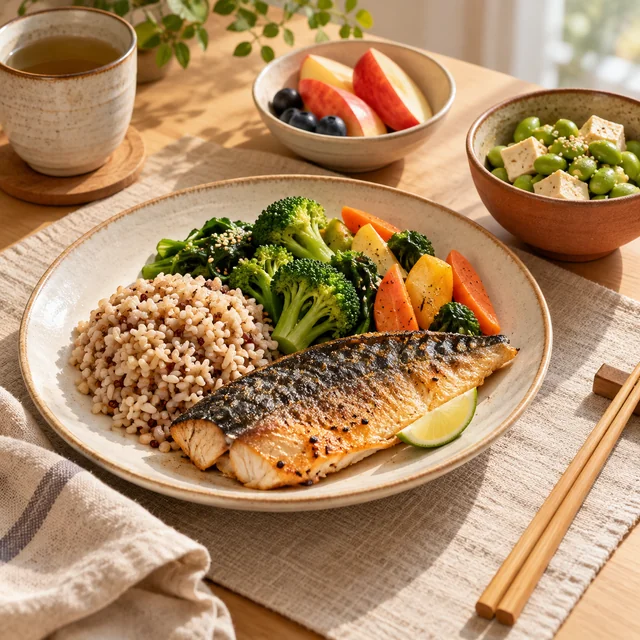
Choose a balanced, varied diet
Include vegetables, fruit, whole grains and appropriate protein sources, while limiting salt, sugar and unhealthy fats. Everyday food choices can form a foundation for long-term health.[5]
 05
Keep a regular sleep routine and allow time to recover
Maintain consistent sleep and wake times and make room to unwind before bed. If sleep problems continue to affect your daily life, seek professional help.[6]
These five directions may sound simple. The challenge is often not knowing what to do, but finding a way to keep doing it.
03
Why pay more attention to muscle quality after 40?
Many people have annual checkups and follow their blood glucose, cholesterol, liver and kidney results or imaging reports. But have you also asked: how strong are my muscles? Are my balance, coordination and mobility the same as five years ago?
Muscles do more than support exercise or body shape. They help us walk, stand up, lift things and hold our posture. Strength and physical function may change with age, and those changes may not appear directly in routine health-check numbers.
“Muscle quality” is not the same as muscle mass. Research considers aspects such as composition, structure and function; no single score represents every dimension.[7] Proactive longevity therefore involves more than disease screening. It also includes attention to strength, muscular endurance, balance, coordination and the physical abilities that support independent living.
This article is intended mainly for readers over 40. It does not mean that everyone's body changes in the same way at 40. If an assessment reports a “functional age,” interpret it according to that tool's definition. It is not automatically a biological age, a disease diagnosis or a prediction of lifespan.
Health checks help assess disease risk. Functional assessments help you understand physical ability. The two complement one another; neither replaces the other.
04
What is “active longevity technology”?
Here, “active longevity technology” describes an approach to health management: using assessment tools, data analysis, personalized exercise and ongoing tracking to help people understand physical function earlier and build regular health habits. It is an editorial theme, not a specific medical therapy or certification.
The approach can be described in five steps:
- 01 / ASSESSAssess
- 02 / PLANPlan
- 03 / ACTAct
- 04 / TRACKTrack
- 05 / ADAPTAdapt
This is also the direction LoopAI aims to support: technology that does more than provide information, helping people turn health plans into everyday habits they can follow and record.
05
LoopAI: using AI exercise prescriptions to support action
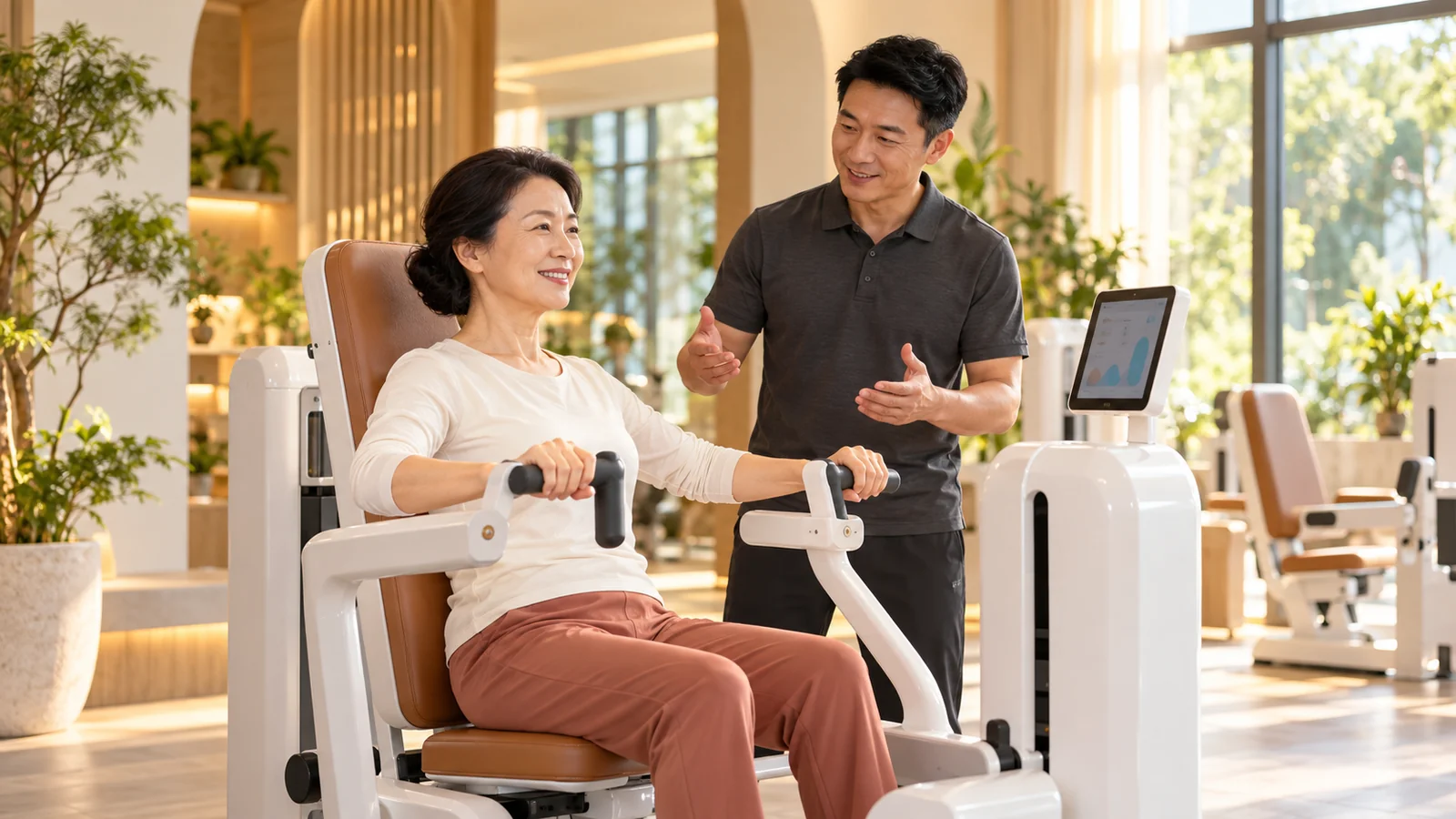
LoopAI is an AI exercise prescription and health management platform. SMARC provides its core technology, LAI is its voice AI health coach, and exercise specialists provide in-person guidance — connecting functional assessment, exercise and ongoing tracking.
In this service model, technology helps record and guide, while people help explain and support the activity, making health management easier to fit into daily life.
90sec
PMQS functional assessmentUnderstand your current physical function
PMQS muscle quality and functional assessment provides a reference starting point for personalized exercise management.
32min
AI exercise prescriptionStart a health routine suited to you
Use SMARC equipment to follow a personalized AI exercise prescription, with on-site guidance from an exercise specialist.
6weeks
Regular reassessmentCreate opportunities to see your progress
A standard service cycle is about two visits per week, or 12 visits over six weeks, followed by reassessment and a review of the exercise plan.
100sessions
Annual managementMake health a lasting habit
Annual planning, appointment reminders, support from health consultants and continued tracking help members build regular activity into daily life.
These figures describe LoopAI's service design. They do not mean everyone needs the same amount of exercise, nor do they guarantee a longer life or improvement in a particular disease. PMQS assessment is a reference for exercise management, not a substitute for medical diagnosis. “AI exercise prescription” is the name of a health management and exercise service, not a medical prescription issued by a doctor. Individual plans must take health status, abilities and risks into account.
06
The future of longevity also depends on better everyday habits
Useful longevity technology should do more than show people additional health numbers. It should also help them understand their bodies, find appropriate actions and keep putting them into practice.
Choosing to start walking today is a step toward active longevity. So is paying attention to muscle quality, or beginning a regular exercise habit.
Technology can make these actions easier to understand, more focused and easier to sustain. LoopAI aims to help each member make health management a natural part of life, rather than something remembered only occasionally.
LOOPAI · ACTIVE LONGEVITY
Keep your ability to move for your future self.
Understand your physical function in 90 seconds, begin a health routine in 32 minutes and use ongoing tracking to build a lasting habit.
Explore the 90-second PMQS muscle quality assessment →Explore LoopAI AI exercise prescriptions →Contact us · Request a functional assessment →Health information notice
This article provides general health education. It is not a medical diagnosis, treatment or personalized medical advice. If you have a chronic condition, exercise restrictions or other health concerns, consult a qualified healthcare professional before beginning a new exercise program.
Research and references
Research findings must be interpreted in light of the populations, methods and limitations of each study. They cannot be taken as direct evidence of the effects of LoopAI services.
- WHO|Healthy ageing and functional ability ↗2020-10-26
- Li Y et al.|Healthy lifestyle and life expectancy free of cancer, cardiovascular disease, and type 2 diabetes: prospective cohort study ↗BMJ 2020;368:l6669 · DOI: 10.1136/bmj.l6669
- WHO|Physical activity ↗Accessed: October 13, 2026
- MedlinePlus|Healthy Aging ↗Accessed: October 13, 2026
- WHO|Healthy diet ↗2026-01-26
- MedlinePlus|Healthy Sleep ↗Accessed: October 13, 2026
- Cruz-Jentoft AJ et al.|Sarcopenia: revised European consensus on definition and diagnosis ↗Age and Ageing 2019;48:16–31 · DOI: 10.1093/ageing/afy169
Topic background
Women's Health | October 12, 2026 feature on longevity habits (topic background) ↗
Used only as background for the topic. Health statements rely on the original research and official sources above. No images from that publication were used.